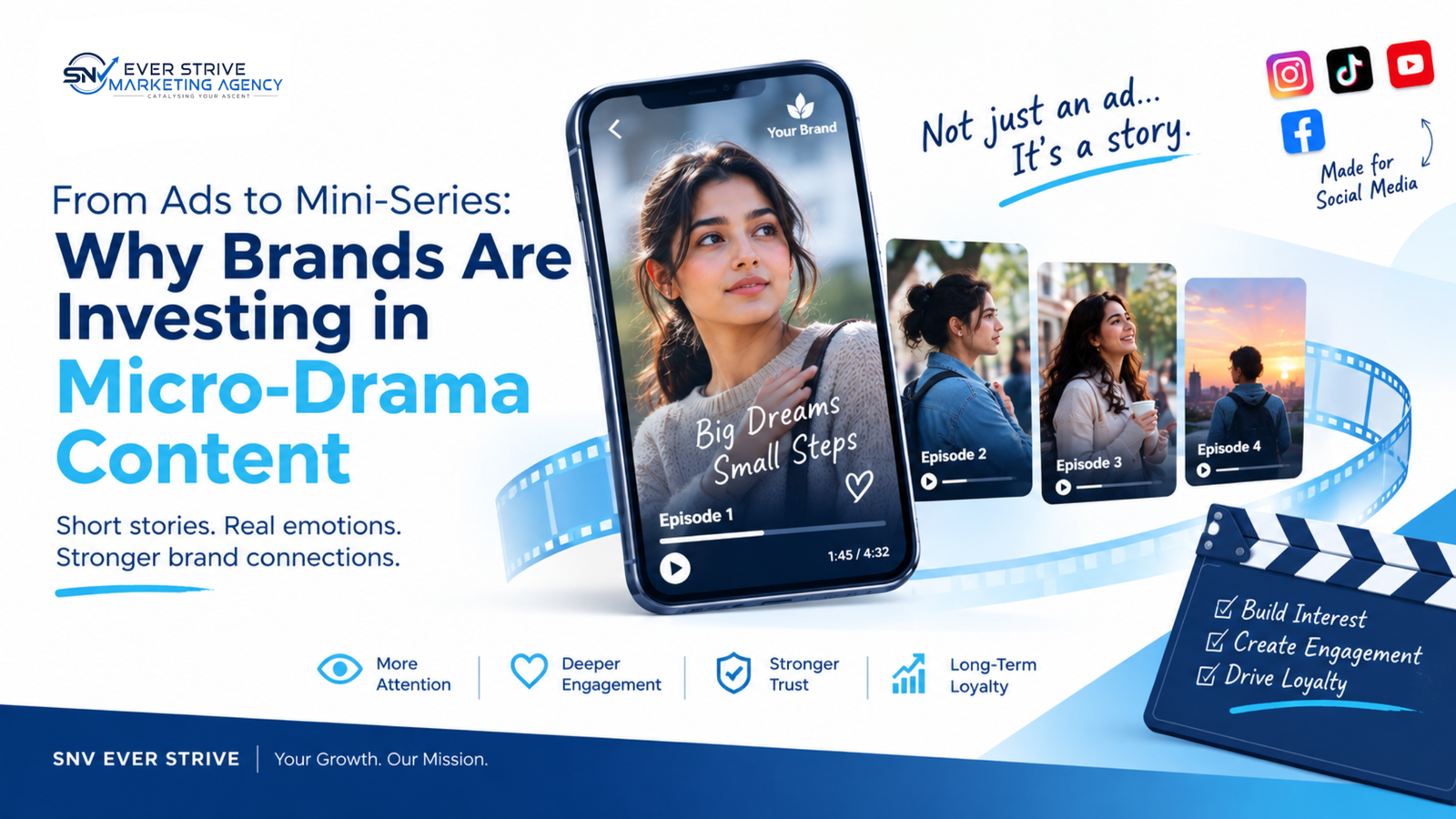
From Ads to Mini-Series: Why Brands Are Investing in Micro-Drama Content
Attention is the hardest thing to earn online right now. People scroll past dozens of ads a day without a second glance, and most brands are still fighting for that half-second of eye contact. A newer format is changing the math: micro-drama content, short serialized stories told over multiple episodes, where the brand message lives inside the story instead of interrupting it.
Forget the idea that an ad has to be a 30-second pitch. Storytelling in marketing is shifting, and the brands willing to try this format aren’t just getting views; they’re getting people to actually stick around. Here’s what’s driving it.
Why Traditional Ads Are Losing Ground
Nobody sits down hoping to watch a commercial. Most people treat ads as something to tune out, skip, or scroll past without thinking twice. And the more ads someone sees, the less each one lands. People aren’t looking for a sales pitch anymore; they want something that holds their attention, makes them feel a certain way, or actually fits into how they already spend their time online.
Micro-drama content flips that whole dynamic. Instead of selling something outright, it puts a story in front of you, one with characters you can relate to and a plot that pulls you in episode by episode, built for a phone screen and a short attention span. The brand isn’t interrupting the experience anymore. It’s part of it.
What makes this work is how quietly the brand values show up. A beauty label might follow a character’s journey toward self-confidence. A lifestyle brand might lean into the small, everyday struggles people actually deal with. Done well, it doesn’t feel like marketing at all.
Short Episodes, Big Impact
Most micro-dramas run under five minutes an episode, which suits exactly how people consume content now: in short bursts, between other things. That length keeps the pacing tight and leaves people wanting the next part instead of tuning out halfway through.
There’s a social layer to it too. People talk about plot twists, send episodes to friends, argue about what happens next. That’s free reach a single ad could never generate on its own.
Building Loyalty One Episode at a Time
A regular ad shows up once and disappears. A mini-series sticks around, and every new episode adds another layer to how the audience feels about the brand. Over time, that adds up to something ads rarely manage: people start to trust the brand, not just recognise it.
That kind of trust tends to show up later as better recall and customers who stick around longer.
Real-World Wins: Brands Leading the Micro-Drama Movement
A handful of brands have already made this work:
Glossier put together a mini-series built around real customer stories, focused on the emotional side of beauty rather than the products themselves.
Nike ran episodic content following athletes’ lives off the field, leaning into the personal side of perseverance rather than performance stats.
Netflix uses mini-drama-style trailers and behind-the-scenes clips to keep people hooked between seasons, which says a lot about how far entertainment marketing can stretch loyalty.
None of these are just ads with a story slapped on top. They’re building something closer to a brand culture.
Short, story-driven video is exactly what platforms like Instagram Reels, TikTok, YouTube Shorts, and Facebook Stories are built around, so micro-dramas fit right in without needing to be reshaped for the format.
And because it’s episodic, every new part is another chance to show up in someone’s feed, remind them the brand exists, and nudge them a little closer to becoming a customer.
Challenges to Keep in Mind
This format isn’t foolproof, and it falls apart fast if it’s handled carelessly:
It has to feel real. People can tell within seconds when a story exists purely to sell them something.
Quality can’t slip between episodes. One weak instalment and viewers stop coming back.
The brand can’t take over the story. The second it feels like a commercial wearing a story’s clothing, it loses the audience.
The Future of Brand Storytelling Is Episodic
People aren’t interested in being shouted at anymore. They want something worth coming back to. Micro-drama content is shaping up to be one of the more effective ways brands can earn that, not by being louder, but by being worth watching.
If you’re rethinking how your brand shows up online
Micro-drama content is one interesting answer.
Instead of asking, “How do we make people watch our ad?” brands are starting to ask a better question: “What can we create that people actually want to watch?”
That change could make storytelling a much bigger part of digital marketing in the years ahead.
And for brands willing to experiment, the next big campaign might not be a 30-second advertisement at all. It might be episode one.
Ready to Turn Your Brand Story into Something People Want to Watch?
At SNV Ever Strive, we believe good marketing is not just about getting attention. It is about creating content that people remember and connecting that attention to real business goals.
From CONTENT WRITING, SOCIAL MEDIA MARKETING and VIDEO EDITING to BRANDING, SEO, META ADS and GOOGLE ADS, we help brands build a stronger presence across digital channels.
Have a brand story worth telling? Let’s turn it into content people actually want to watch.